Maintaining a healthy lifestyle involves a combination of factors, with a balanced diet being a cornerstone. In today's fast-paced world, it's easy to overlook the importance of consuming the right portions of various foods. In this blog post, we'll delve into the concept of recommended daily portions, explore why they matter and provide practical tips on how to incorporate them into your daily routine.
Before we dive in, let us state: It's important to note that recommended daily portions can vary based on individual factors such as age, gender, activity level, and specific dietary needs. Consulting a registered dietitian or healthcare professional can provide personalised guidance on portion sizes that align with your goals. The knowledge in this article therefore serves as a general guide and you should always listen to your body on a day-to-day basis. I'd like to clarify that I am not an expert on this matter, but I've undertaken thorough research to the best of my abilities. Please consider my insights within this context.
Creating a Balanced Plate
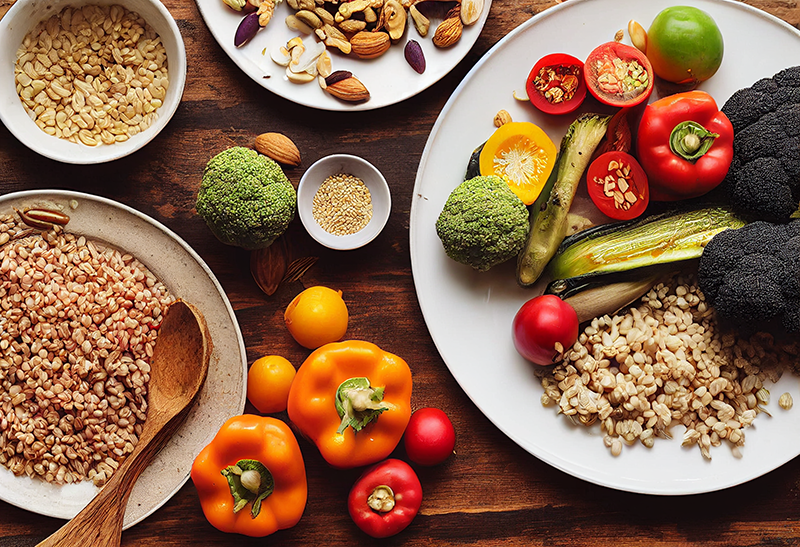
The following recommendations are designed to ensure that our bodies receive essential nutrients, vitamins, and minerals for optimal functionality. Striking the right balance among different kinds of foods can help prevent overeating, manage weight, and reduce the risk of chronic diseases such as diabetes, heart disease, and obesity.
Based on organisations from different countries (see sources at the end), the following can be summarised:
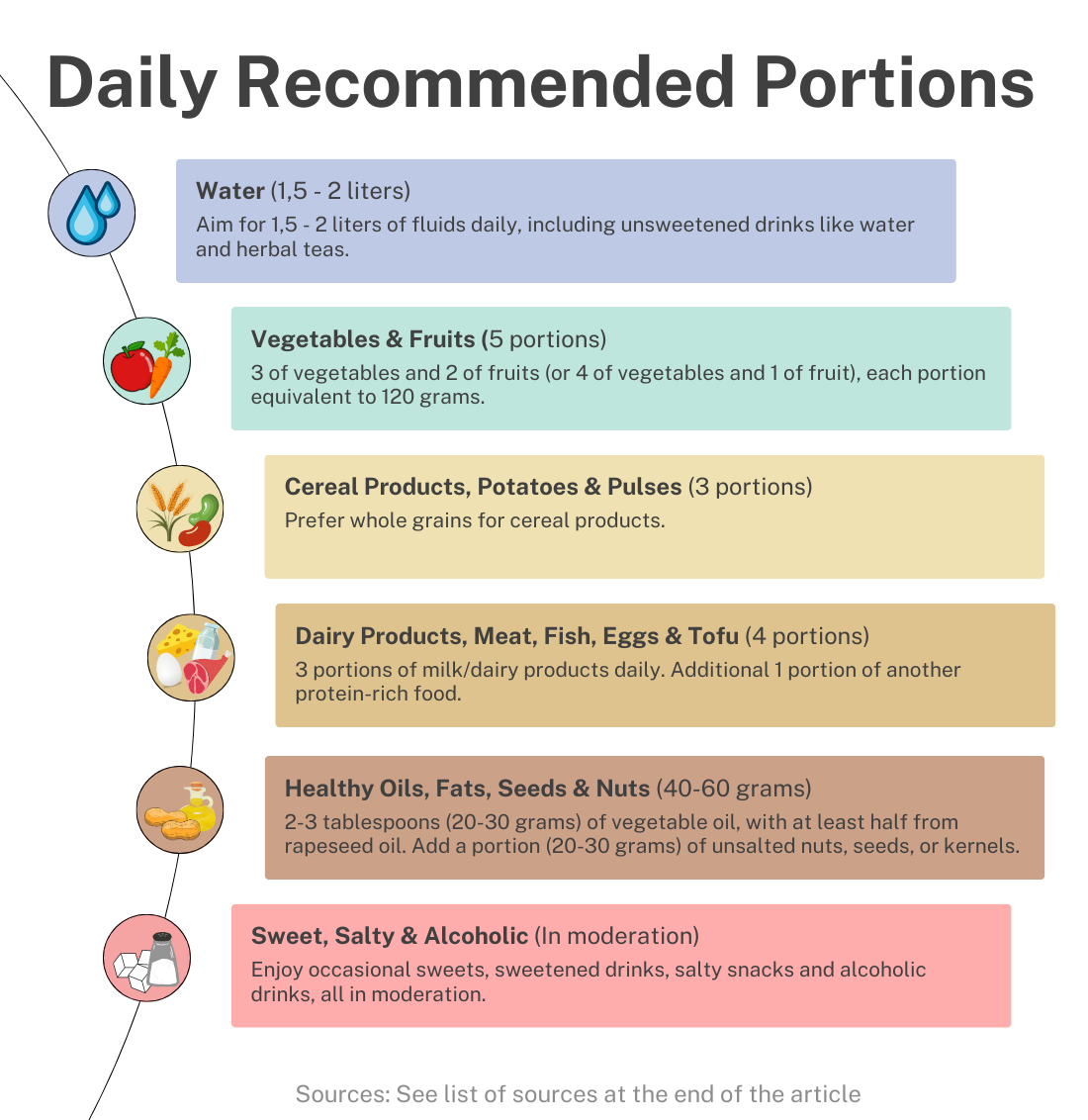
- Stay Hydrated: Aim for 1.5 - 2 liters of fluids daily, including unsweetened drinks like water and herbal teas. Caffeinated drinks such as coffee, black and green tea can contribute to hydration.
- Vegetables & Fruits (5 portions): Consume 5 portions daily, including 3 of vegetables and 2 of fruits (or 4 of vegetables and 1 of fruit), each equivalent to 120 grams. A portion can be replaced by 0.2 liters of vegetable or fruit juice without added sugars. These nutrient-packed foods provide essential vitamins, minerals, and fiber.
- Cereal products, potatoes & pulses (3 portions): Incorporate 3 portions daily of whole grains, potatoes, or pulses. Each portion can be 75-125 grams of bread, 60-100 grams of pulses, 180-300 grams of potatoes, or 45-75 grams of cereal products. Whole grains are a great source of sustained energy and dietary fiber.
- Dairy products, meat, fish, eggs & tofu (4 portions): Consume 3 portions of dairy products, each portion equivalent to 0.2 liters of milk or 150-200 grams of yogurt, curd, or cheese. Also, enjoy 1 portion of protein-rich foods daily, such as meat, poultry, fish, eggs, tofu, or plant-based alternatives. Limit meat consumption to 300 - 500 grams per week.
- Healthy Oils, Fats & Nuts (40-60 grams): Include 2-3 tablespoons (20-30 grams) of vegetable oil, with at least half from rapeseed oil (of good quality!). Add a portion (20-30 grams) of unsalted nuts, seeds, or kernels to your daily intake.
- Sweet, Salty & Alcoholic: Enjoy occasional sweets, sweetened drinks, salty snacks and alcoholic drinks, all in moderation.
A link to an overview of a selected list of foods with additional information, such as the recommended amount or their nutrients and benefits, can be found and downloaded at the end of this article.
The Importance of Moderation
Maintaining good health rests upon a foundation of a diet that is both balanced and rich in nutrition. Our bodies rely on a wide variety of foods to supply the essential elements they need to function at their best. This highlights the importance of ensuring that we obtain all the necessary vitamins, minerals, and other nutrients from the foods we consume, contributing to our general state of wellness. However, excessive consumption of certain foods can lead to negative health consequences. For instance:
- Excessive consumption of added sugars may contribute to obesity and type 2 diabetes
- Processed foods laden with sodium can lead to high blood pressure and cardiovascular issues
- Excessive consumption of cacao hinders the absorption of calcium, thereby impacting the health of your bones. (Another reason to be cautious about consuming large amounts of cocoa is its significant water footprint. This issue is also explored in my earlier blog post titled "DIVING DEEP: UNVEILING WATER CONSUMPTION THROUGH FOOD")
It's crucial to strike a balance and practice mindful eating to prevent potential side effects.
Conclusion
Incorporating recommended daily portions into your eating habits is a powerful step toward achieving and maintaining a balanced, healthy lifestyle. By understanding serving sizes, building a balanced plate, and practicing portion control, you can make informed choices that support your overall well-being. Remember, small changes in portion sizes can lead to big improvements in your health over time. If you're unsure about where to start, consulting a healthcare professional or registered dietitian can provide you with personalised guidance tailored to your unique needs and goals. In my personal opinion, I don't think it's bad to try to orient oneself to data. But you shouldn't go crazy about it. Healthy eating is not about sticking to exact target values but about finding a good mix of healthy and tasty. And that is only possible with variety and trial and error. And with that, all that remains for me to say is: "Bon appétit!"
Downloads (Please note there are two tabs: "Food Groups" and "Foods". If you miss any food items in the file provided, please let me know and I will be happy to add them.):
Sources:
- Food and Agriculture Organization of the United Nations: https://www.fao.org/nutrition/education/food-dietary-guidelines/en/
- Deutsche Gesellschaft für Ernährung e.V.: https://www.dge.de/gesunde-ernaehrung/dge-ernaehrungsempfehlungen/10-regeln/
- Schweizerische Gesellschaft für Ernährung SGE: https://www.sge-ssn.ch/ich-und-du/essen-und-trinken/ausgewogen/schweizer-lebensmittelpyramide/
- Santé publique France (siège social): https://www.mangerbouger.fr/manger-mieux/a-tout-age-et-a-chaque-etape-de-la-vie/les-recommandations-alimentaires-pour-les-adultes
- European Food Safety Authority (EFSA): https://www.efsa.europa.eu/en
- Dietary Guidelines for Americans: https://health.gov/sites/default/files/2019-09/2015-2020_Dietary_Guidelines.pdf