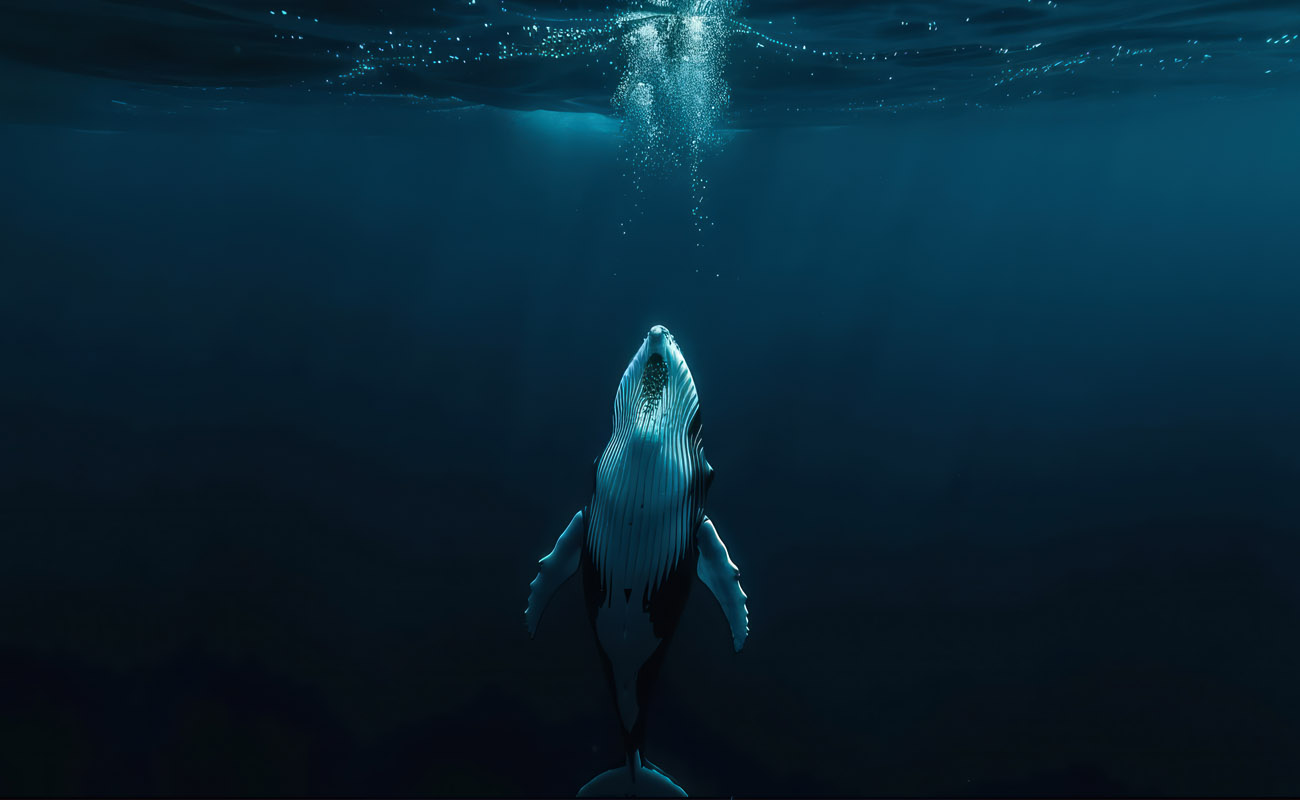
As I sit down to write these lines, my mind wanders to a personal memory that still brings a smile to my face, one I'd love to share with you. A few years back, during a boat trip, I had the extraordinary privilege of witnessing not just one, but several humpback whales. Their tails moved in a collective motion, arcing out of the water and showcased a profound sense of unity. The sheer grace and might of this creatures were not just a spectacle for the eyes but a balm for the soul and remain etched in my heart. To me, they are not just living beings; they symbolise the beauty and balance of our oceans. Discussing these magnificent creatures inevitably brings into conversation the oceanic ecosystem, the equilibrium of marine life, and ultimately, the survival of our planet. As we dive deeper into some fascinating facts about them, we come to understand their critical role these titans play in maintaining our planet's environmental balance and gain a deeper understanding of the lives of the largest animals on Earth.
Physical Attributes
Let us start with the most obvious facts visible to the naked eye. The immense size of whales. Consider the blue whale, the largest known creature to have ever lived on our planet, surpassing even the largest dinosaurs. It can grow up to 30 meters (100 feet) long — longer than three school buses placed end to end — and weigh as much as 200 tonnes. Its heart is the size of a golf kart, and its tongue alone can weigh as much as an elephant.
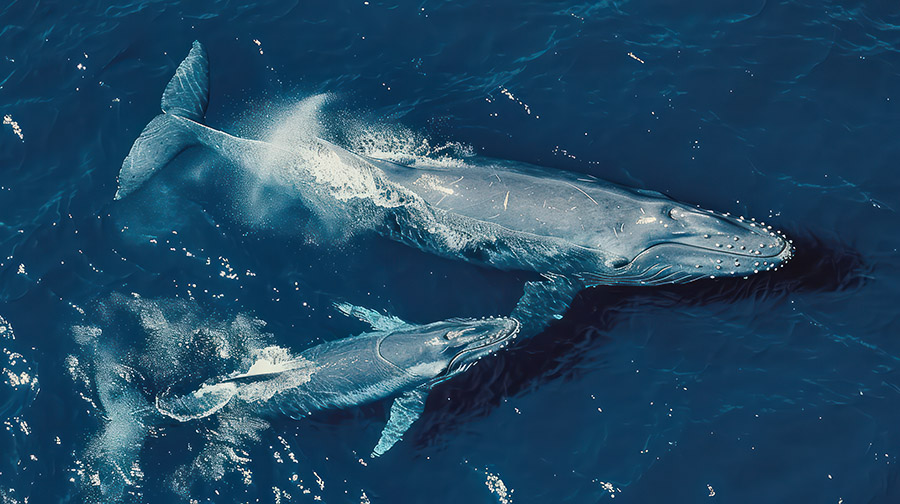
Then there's the sperm whale, which has the largest brain of any known creature in our planet's history. Remarkably, it's five times heavier than the human brain.
Beyond these impressive physical attributes, whales are fully adapted to life in the ocean yet retain key mammalian traits. They are warm-blooded, air-breathing, and nurse their young with milk. They even possess hair, a subtle reminder of their land mammal ancestors. In a remarkable evolutionary journey, contrary to the usual path of life from water to land, whales took an extraordinary turn from land back to water, adapting gradually over time. As recent studies reveal whales' closest living relatives are, surprisingly, hippos.
Sleeping Habits
Whales share a common necessity with land-dwelling animals and humans alike: the need for sleep.
Unlike us, who breathe without conscious thought, whales are voluntary breathers. Each breath is a conscious decision, an essential act that cannot be forsaken even in sleep. Such a requirement poses a significant challenge when it comes to sleep; if whales were to enter a full state of unconsciousness like we do, they would potentially drown. Therefore this has led to a remarkable evolutionary adaptation: ‘unihemispheric sleep’.
In this unique state, a whale rests only half of its brain at a time, with the other half remaining alert to manage breathing and maintain awareness of their environment. Periodically, the whale switches sides to ensure both halves of the brain receive the rest they need. That ensures they remain conscious enough to breathe and to remain aware of their surroundings. This ingenious solution ensures their survival in the vast, unforgiving ocean.
The amount of sleep they need can vary significantly among species. Research on sperm whales suggests they might spend as little as 7% of their day sleeping. These short, intermittent naps of about 10-15 minutes are believed to make sperm whales the species with the least need for sleep on the planet.
Migration
Among nature's most impressive spectacles, whale migration stands out as a remarkable display of endurance and instinct. Covering thousands of kilometres annually, whale migration is driven by the need to access the most favourable environments for feeding, breeding, and raising their young. In colder regions of the ocean, they find abundant food sources, such as krill and small fish, allowing them to build up energy reserves necessary for their long journey and the breeding season that follows. The warmer climates of their breeding grounds, on the other hand, offer safer conditions for giving birth and nurturing their calves. In these protected environments, newborn whales can grow stronger and more capable of making the return journey to the feeding areas.

This cycle of migration, driven by the need to feed and breed, highlights the whales' deep connection with their environment. Over time, as ocean temperatures shift and food availability changes so that these regions become less hospitable to them, whales may adapt their migratory paths, highlighting their innate ability to respond to environmental cues.
Deep Diving Abilities
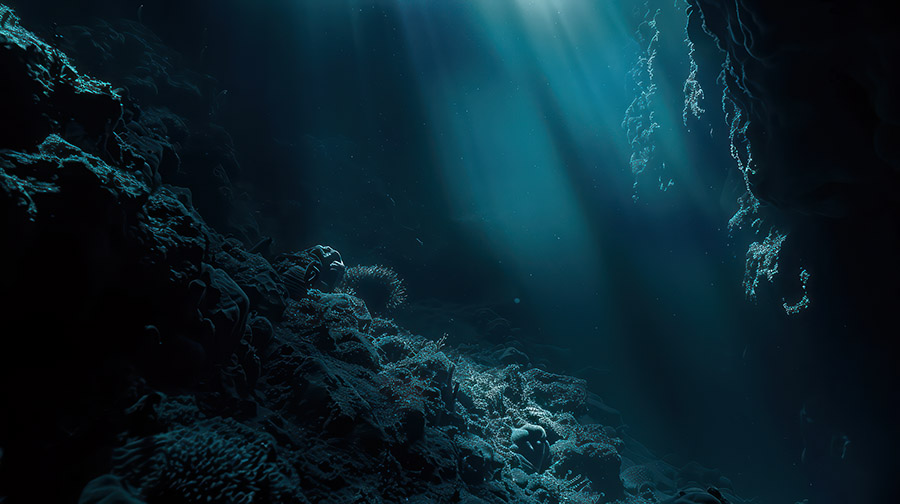
Cuvier's beaked whales are record-breakers, diving deeper than any other mammal. They dive over 2,000 meters below the surface. Their ability to hold their breath for hours is not only impressive but also crucial for their survival. It allows them to access food sources in the deep sea that are out of reach for most other marine creatures.
Whale Feeding and Social Strategies
Whales exhibit a remarkable range of feeding strategies and social behaviours that underline their adaptability and essential role in marine ecosystems. For instance, the humpback whales are known for their bubble-net feeding technique. This involves a coordinated effort where a group of whales swims in a circle, blowing bubbles underneath a school of fish. This creates a 'net' of bubbles that traps the fish, making it easier for the whales to then feast on their prey.
On the other hand, sperm whales, demonstrate a different form of adaptability in their hunting practices. They dive to great depths to hunt their preferred prey which is different squid species. Their bodies are uniquely adapted for these deep-sea dives, with features such as a collapsible rib cage.
These varied feeding strategies highlight the whale's crucial role in the ocean's food web. By influencing the distribution and abundance of prey species, whales help sustain the ecological balance of marine environments.
Echolocation and Communication
Toothed whales, such as dolphins and sperm whales, possess an extraordinary skill known as echolocation. It allows them to "see" their environment in complete darkness in the ocean depths. Echolocation works by emitting a series of clicks that travel through water. When these sounds hit an object, they bounce back as echoes, giving the whale detailed information about the object's size, shape, distance, and even texture. This sophisticated natural sonar is essential for navigation complex environments, locating prey, and avoiding potential predators.
But whales' communication abilities go far beyond echolocation. They have a rich language of sounds, including moans, cries, howls, and, notably, the beautiful songs of humpback whales. These complex sequences of sounds can last for hours and are believed to serve multiple purposes. They play a role in mating rituals and are also thought to be used for navigation across the vast oceans. Recent research has revealed that humpback whales, in particular, share their complex songs across thousands of kilometres. Patterns in their songs have been traced moving from populations in Australia to French Polynesia and onward to Ecuador. This highlights the depth of the social connections that exist among humpback whales.
The Ocean's Fragrant Gold

One of the more unusual aspects of whale biology is the production of ambergris. This rare and valuable substance, a fascinating by-product of the sperm whale's digestive system, is highly prized in the world of perfumery. Renowned for its unique ability to enhance and extend the duration of fragrances on human skin, ambergris is found either floating in the ocean or washed up along coastlines. The value of ambergris is staggering, with just a single kilogram of this rare substance often reaching tens of thousands of dollars.
Survivors of Mass Extinctions
Whales have a long history on our planet, having survived multiple mass extinctions that have reshaped life on Earth. Their ability to adapt to changing conditions over millions of years underscores their resilience. However, they currently face new threats from human activities and climate change, which have caused a significant decline in whale populations and pushed some species to the brink of extinction.
Yet, the remarkable recovery of humpback whale populations demonstrates the effectiveness of protective measures such as the 1966 ban on commercial whaling and the establishment of protected areas. Due to whaling, their numbers plummeted from approximately 125,000 to just 10,000 - 15,000 by the 1960s. Since then, they have rebounded to an estimated 80,000 - 90,000. This recovery proves that reversing the trend of endangerment is possible, offering hope for the future of all whale species.
Particularly noteworthy is the recovery of the humpback whale population in Australian waters, which has thrived since the ban on commercial whaling in 1979. From a critical low of 1,500 individuals, their numbers have increased to an estimated 40,000 showing once again their remarkable resilience. :)
Phytoplankton: The Fight Against Climate Change
As we delve deeper, it becomes increasingly clear that whales are not just incredible animals, but also crucial for the health and sustainability of our planet's environment. The ecological impact of these giants extends far beyond what is immediately apparent, playing a pivotal role in climate regulation and making their conservation a matter of global significance. What's truly astonishing is how they contribute significantly to the very air we breathe.
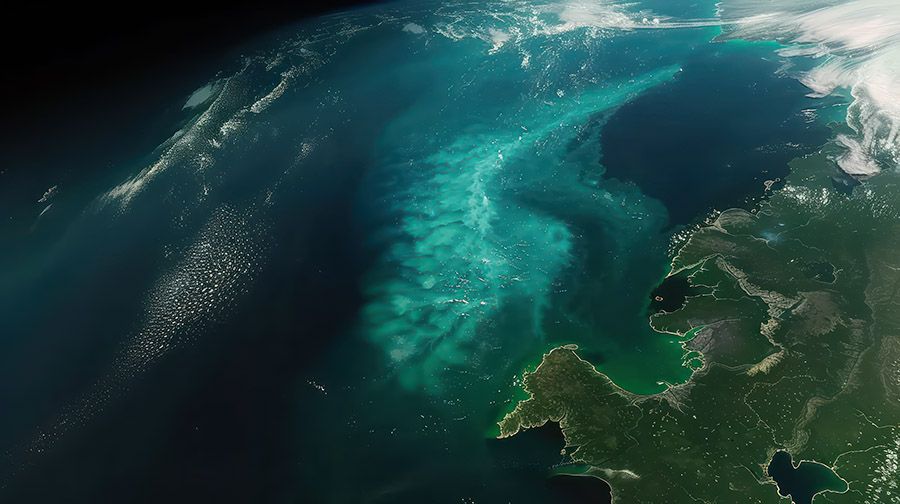
To understand this better, let's step back for a moment from the topic of whales and turn our attention to phytoplankton, which play an important role in this context. Phytoplankton might not feature prominently in our daily conversations about climate change and marine life, and indeed, I had never heard of them myself before watching the Netflix nature documentary series 'Our Planet', which I highly recommend, by the way. However, they are crucial to both marine life and our environment. Phytoplankton are microscopic plants forming the foundation of the marine food web and essential for krill, small fish, and other marine life. Their presence in the oceans attracts fish and other marine life, fostering rich areas of biodiversity. Additionally, they are allies in our fight against climate change, responsible for producing a significant portion of the world's oxygen, with estimates ranging from 50 to 85%. At the same time, they absorb approximately 40% of the CO2 produced globally – four times the amount captured by the Amazon rainforest. Now, the question arises: What role do whales play in all of this?
Nutrient Cycling: Why is Poop So Important?
Phytoplankton require sunlight energy at the ocean's surface but depend on nutrients found in the deep sea for growth. The mixing of water by winds or currents brings these nutrients to the surface, enabling phytoplankton to flourish in vast numbers, sometimes in numbers so vast that they are visible from space!
However, climate change threatens to alter ocean currents, thus reducing the nutrient supply, and leading to a decrease in phytoplankton populations. This reduction could slow down the biological pump process, which transports carbon into the deep ocean, consequently leaving more CO2 in the atmosphere—where it contributes to further climate change.
In discussing the crucial connection between whales and phytoplankton, we come across an unexpected hero: whale poop. In particular, whales counteract this threat in different ways. The process known as the 'whale pump' describes how whales cycle nutrients by moving them vertically from deep to surface waters. During their deep dives, they feed on carbon-rich krill and small fish, storing carbon in their massive bodies. Upon resurfacing, their poop brings deep-sea nutrients — notably iron, nitrogen and phosphorus — to the upper layers of the ocean. This nutrient-rich waste supports the growth of phytoplankton and other marine life. The migratory patterns of whales enhance this effect. As they travel thousands of kilometres between their feeding and breeding grounds, they distribute these essential nutrients across vast oceanic distances, reaching even the nutrient-poor areas. An interesting phenomenon, known as the 'krill paradox', shows that despite whales eating krill, a higher number of whales often leads to a higher number of krill. This occurs because of all the extra whale poop serving as a food source for krill, boosting their numbers.
Furthermore, whales themselves play a direct role in carbon sequestration. By feeding on the aforementioned krill and small fish, they store carbon in their massive bodies and help to sequester it from the atmosphere. Moreover, whales contribute to the marine ecosystem after death. 'Whale falls' describe the process when a carcass of a dead whale sinks to the ocean floor (deeper than 1,000 m or 3,300 ft). As the body decomposes, it provides a boon of nutrients, thereby supporting deep-sea biodiversity and fostering complex ecosystems. As a matter of fact, observations of deep-sea whale fall sites have led to the discovery of new species, some of which may specialise in whale falls. This process not only highlights the whales' role in sustaining life at the ocean's surface but also in enriching biodiversity in the most remote parts of the marine environment.
Conclusion
From their physical attributes to their unique behaviours and to their ecological roles, whales are far more than just the largest mammals in our oceans. Throughout our brief journey, we've not only explored key facts but also delved deep into their indispensable role within our oceans and the broader environmental context. The insights gained from understanding the 'whale pump', their involvement in nutrient cycling, and their impact on phytoplankton populations reveal an essential relationship between whales and the well-being of our planet.
Therefore, the conservation of whales is profoundly impactful, significantly affecting atmospheric CO2 levels and playing a critical role in maintaining the health and productivity of marine ecosystems. This, in turn, influences global biodiversity and supports life in both coastal and deep-sea ecosystems. In fact, the presence of whales is a key indicator of a healthy marine ecosystem, with rich biodiversity and a well-functioning marine habitat. Their critical role makes them essential in the fight against climate change. The conservation of whale populations could, therefore, be a significant step toward achieving broader climate goals.
It is my hope that this exploration of the world of whales has brought these remarkable beings closer to your heart and mind. In the grand narrative of our natural world, understanding the role of these magnificent creatures is important. May this glimpse into their lives deepen your appreciation for their existence and highlight the urgency of their preservation.
Links:
- Humpback Whales Pass Their Songs Across Oceans: https://www.nytimes.com/2022/08/30/science/humpback-whale-songs-cultural-evolution.html
- Solving the Krill Paradox: https://scitechdaily.com/solving-the-krill-paradox-researchers-find-whales-eat-and-poop-far-more-than-previously-thought/
- Nature's solution to climate change: https://www.imf.org/Publications/fandd/issues/2019/12/natures-solution-to-climate-change-chami
- Phytoplankton: https://climate.mit.edu/explainers/phytoplankton
- The Whale Pump: https://www.ncbi.nlm.nih.gov/pmc/articles/PMC2952594/
- Whales echolocate with big clicks and tiny amounts of air: https://www.snexplores.org/article/whales-echolocate-with-big-clicks-and-tiny-amounts-of-air